
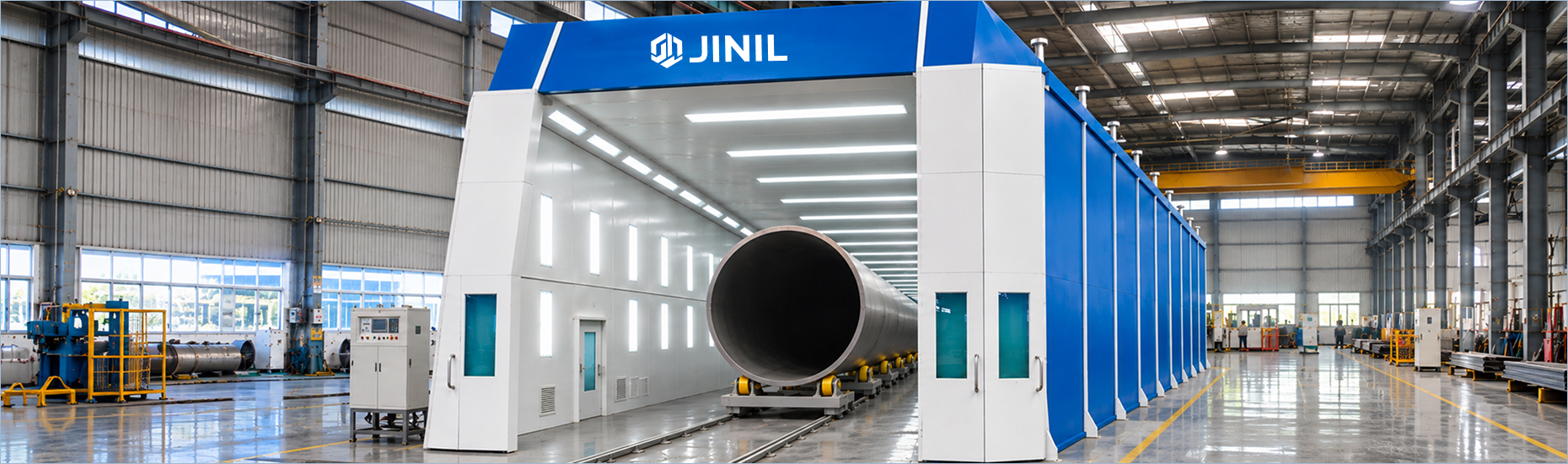
In an industrial facility, painting is often one of the final steps before a component is ready for inspection or dispatch. But achieving a consistent finish involves more than the paint being used. Airflow, dust, overspray and the working environment all influence the outcome. This is where a paint spray booth becomes important. It provides a controlled space for painting operations while helping manage airborne particles and excess paint.
For the automotive, metal fabrication and heavy engineering businesses, the right booth is one that's selected after properly understanding the production requirements, the ventilation, the filtration and the safety implications prior to making any investment.
What Is a Paint Spray Booth?
A paint spray booth is an enclosed or partially enclosed space in which paint and/or protective coatings are applied to various components. It is designed to control the flow of air and to capture the overspray which is generated during the spraying process.
When you're spraying the paint some of the paint particles are simply going to remain in the air and not actually land on the component. The booth will take that air and route it to the appropriate filtration and extraction points so you're dealing with the overspray and you end up with a much cleaner booth.
Industrial paint booths will take in components of all sorts of sizes, from fabricated parts right through to large pieces of machinery and structures.
The main purposes include:
- Controlled painting: provides a dedicated painting area.
- Overspray management: captures the excess paint particles.
- Airflow control: directs air towards the extraction points.
- Finish consistency: helps to minimise the amount of dust in the air.
- Workplace management: painting is separated from the other operations.
How Does a Paint Spray Booth Work?
A paint spray booth incorporates air intake, paint application, overspray collection and exhaust ventilation. Air is drawn in via an intake system, passes through appropriate filters and then flows across the area being painted. The exhaust system then takes the air (containing overspray) and directs it to the appropriate filtration system.
The exact airflow will of course be dependent on the booth design.
Step 1: Air Intake
Fresh air is taken in via an intake and then passes through a series of filters which help to remove the dust and other airborne contaminants prior to entering the painting area.
Step 2: Paint Application
Operators apply the paint using spray guns or other appropriate equipment. The airflow within the booth aids in the control of the airborne particles which are generated during the application process.
Step 3: Overspray Collection
Excess paint particles migrate towards the exhaust side of the booth. The paint arrestor filters (or other collection devices as appropriate) will of course capture the particles in accordance with the system design.
Step 4: Air Exhaust
An exhaust fan will move the air through the filtration system and on to the appropriate discharge or treatment arrangement. The relevant emission requirements will of course have to be taken into account in the design of the exhaust system.
Together these stages serve to maintain the painting operations in a controlled environment.
Types of Paint Spray Booths
Different booth configurations are available to accommodate component sizes, painting methods and production requirements.
The process of manufacturing spray paint booth systems involves selecting suitable enclosure, ventilation and filtration arrangements.
1. Crossdraft Spray Booth
A crossdraft booth utilises horizontal airflow. Air enters at one end, flows across the painting area and then proceeds to the exhaust filters at the other end. The relatively straightforward airflow arrangement makes it suitable for a wide variety of general industrial painting applications.
2. Downdraft Spray Booth
In the downdraft booth, the filtered air comes from the top and flows downwards through the spray painting area. The exhaust system is normally situated beneath the work area, which means that the overspray is directed away from the component. This design will require appropriate floor and exhaust facilities.
3. Semi-Downdraft Spray Booth
The semi-downdraft booth involves airflow in two directions - vertically downward and horizontally. Air will enter from the upper area and will flow to exhausts situated at sides and/or rear areas. This type of booth will be chosen if it is impossible to install a downdraft booth in the plant
4. Side-Draft Spray Booth
A side-draft booth directs the air across the painting area to the extraction points located along the side. This can be an appropriate solution in certain industrial situations where the factory layout or the nature of the process makes other types of airflow arrangement unsuitable.
5. Portable Paint Spray Booth
This booth is constructed with the intention of being portable or movable if needed. The portable paint spray booth can be used for small objects or if there is no space for the stationary booth. It is very important to have the size and ventilation capacity measured before purchasing.
6. Cabinet Spray Booth
A cabinet spray booth is a small unit and is generally used for small components and batch painting type of operations. It can be the right solution for a workshop or a fab where you're dealing with small parts and don't need a large cabinet type of painting unit.
Key Components of a Paint Spray Booth
A paint spray booth is made up of a number of components which work together to manage the airflow, the overspray and the painting conditions. The main components are:
- Booth enclosure: This sets up the area to be painted and covers all the major components.
- Air intake filters: These filter dust and other particulates from entering air.
- Exhaust fans: They provide airflow control and force the air into the exhaust system.
- Paint arrestor filters: Capture excess paint particles.
- Ducting system: Directs airflow through the intake and exhaust.
- Lighting system: Provides visibility during painting and inspection.
- Spray booth control panel: Manages operating functions, fan controls and safety interlocks.
- Access doors: Allow operators and components to enter and exit the booth.
Paint Spray Booth Applications Across Industries
There are many industries where paint spraying is done on various parts to protect them from corrosion and give them a smooth coating. The paint spray booth offers a perfect environment for this purpose.
These booths are widely used in automotive, heavy engineering, metal fabrication, furniture manufacturing, railways, construction equipment and general manufacturing. Booth requirements vary depending on component size, coating materials and production needs.
An automotive paint spray booth is designed to accommodate vehicle components and their specific coating requirements.
Factors to Consider When Choosing a Paint Spray Booth Manufacturer
Selecting a manufacturer is a key part of the procurement process. The equipment has to be appropriate for the application and the operating requirements of the facility.
When comparing paint booth manufacturers, evaluate their engineering capabilities, application knowledge and after-sales support.
Application Understanding
The manufacturer should have a good understanding of the component dimensions, the coating materials and the production process. All of these will have an effect on the booth size, the airflow and the filtration required.
Engineering and Design Capabilities
Make sure that the vendor is able to evaluate the geometry of the component, production quantity, and factory setup before suggesting an appropriate configuration.
Manufacturing Quality
Look at the enclosure construction, the materials used, the quality of fabrication and the specification of the key components. All of these will have an impact on the suitability of the equipment for regular industrial use.
Ventilation and Filtration Knowledge
The vendor should be able to specify the intended layout of ventilation, fan capacity, filtration stages, and exhaust.
Installation and After-Sales Support
Ask about installation advice, commissioning assistance, spares, and other support services.
A good manufacturer would be able not only to provide the relevant documentation but also to prove how the proposed equipment satisfies the requirements set at the project evaluation stage.
How to Select the Right Paint Spray Booth for Your Business
Prior to making a purchase, you should analyze your current painting process and future needs. The guidelines below will allow you to choose from the array of existing booths.
The right paint booth should match the facility's production requirements and available space.
Step 1: Identify the Components
Find out the largest size of those components that will have to be painted, such as their length, width and height.
Step 2: Evaluate Production Volume
Calculate how many components will be painted during one shift or a day. It will help to define what booth capacity you need and how you should organize it.
Step 3: Identify Coating Requirements
Consider the paint type, coating material and application method. Solvent-based and water-based coatings may have different ventilation, filtration and safety requirements.
Step 4: Assess Factory Space
Determine the available floor space, ceiling height, entry/exit points and exhaust options. The design should also provide convenient loading and unloading.
Step 5: Compare Technical Specifications
Compare the ability to handle airflow, fan specifications, filter system, dimensions, and power consumption. Avoid comparing the products by their descriptions alone; instead, use technical specifications.
Step 6: Consider Maintenance Needs
Evaluate filter replacement, inspection, energy usage and servicing requirements prior to purchasing the equipment.
Important Paint Spray Booth Specifications to Compare
Technical specifications help buyers determine whether a proposed booth can meet their production requirements. They also make it easier to compare quotations.
| Specification | What Buyers Should Check |
|---|---|
| Internal dimensions | Compatibility with the largest component |
| Airflow capacity | Air volume required for the selected configuration |
| Fan specifications | Motor power, airflow and pressure requirements |
| Filtration system | Intake and exhaust filter types |
| Enclosure construction | Material, thickness and fabrication details |
| Lighting | Visibility and suitability for the operating environment |
| Electrical system | Motor ratings, wiring and power requirements |
| Control panel | Operating functions and safety interlocks |
| Exhaust arrangement | Ducting, discharge and treatment requirements |
| Installation | Foundation, utilities and site preparation |
Fan capacity should be evaluated in relation to booth dimensions, filter resistance and the required airflow pattern. Filtration should also be suitable for the coating material and expected overspray load.
Before approving the design, request technical drawings, equipment specifications and a clearly defined project scope.
Paint Spray Booth Ventilation and Filtration Systems
Ventilation and filtration manage airflow and capture airborne particles during industrial painting.
- Air Intake Filtration: Removes dust and contaminants from the intake air prior to entry into the spray booth.
- Exhaust Filtration: Removes overspray particles from the air prior to its exhaust.
- Airflow Management: Guides the flow of air through the spray booth to the exhaust points.
- Exhaust Fans and Ducting: Control airflow and transport the contaminated air to the exhaust point.
- Filter Maintenance: Inspection and replacement ensure efficient airflow and filtration.
Safety Features and Compliance Considerations
Industrial painting involves paint fumes, airborne particulates and the potential for fire. The safety features and the regulatory requirements need to be taken into account when you're selecting and installing a paint spray booth.
Important considerations include:
- Fire and explosion safety: assess the fire risk and ensure that suitable electrical equipment is used.
- Ventilation: Ensure adequate airflow to deal with paint fumes and any other airborne contaminants.
- Electrical safety: motors, wiring and lighting must be appropriate for the operating environment.
- Operator protection: adhere to the appropriate PPE and safe operating procedures.
- Fire protection: Provide appropriate fire detection and fire suppression systems.
- Environmental compliance: meet all relevant emission and exhaust treatment requirements.
In India businesses should look at the appropriate factory, electrical, fire safety and State Pollution Control Board regulations as relevant to their own facility and operations.
Custom Paint Spray Booths vs Standard Models
Standard and custom designed booths cater to different production requirements. The correct choice will be down to how closely the equipment needs to match the components, the factory layout and the painting process.
Standard Models
Standard models will generally be of a fixed dimension and with a fixed set of equipment. They're the sort of model that would be suitable for a business with fairly standard painting requirements and a fairly standard set of components.
They are generally suitable for:
- Normal size of components.
- Conventional batch painting operations.
- Standard installation conditions for plants.
- Established needs of production.
Custom-Designed Systems
Custom designed systems are developed around the specific production parameters. You can look at the dimensions, the airflow, the filtration and the component handling to suit the application.
They are generally suitable for:
- Large or oddly shaped parts.
- Unique coating needs.
- Production lines that are integrated.
- Areas with space or design limitations.
Customisation should be based on an engineering assessment rather than adding unnecessary features. Buyers should compare the technical scope and operating requirements before finalising a design.
Paint Spray Booth Installation and Maintenance
Correct installation and regular maintenance help maintain the intended operating conditions of a painting system. Both should be considered before purchasing the equipment.
Installation Considerations
Before installation, consider the floor space, headroom, foundation needs, electrical connections, ductwork routing and space for movement of components. In addition, provide access for filter inspection and replacement.
Installation shall be based on approved drawings, specifications of equipment and manufacturer’s instructions.
Regular Maintenance Practices
Routine inspections help to pick up problems before they impact the painting operations.
- Check the intake and exhaust filters regularly.
- Replace any clogged or damaged filters as required.
- Check the fan motors, the belts and the electrical connections.
- Remove the accumulated paint deposits from the areas in question.
- Inspect the ducting and extraction points.
- Check airflow and control panel functions.
- Check the lighting and the access doors.
- Maintain a record of inspections and replacements.
Maintenance frequency is a function of operating hours, paint consumption, filter loading and working conditions.
Customisation and Project Planning Considerations
Planning a paint spray booth involves more than selecting its dimensions. Buyers should discuss the complete application and installation requirements with the manufacturer.
Some important points to establish include:
- Component details: Dimensions, weight, shape and the number of components to be painted.
- Production requirements: Expected output, operating hours and painting frequency.
- Coating process: Types of paint, application method and safety measures during the process.
- Factory layout: Space availability, flow of parts, and exhaust system.
- Equipment scope: Enclosure, fans, filters, ductwork, lighting, and controls.
- Installation responsibilities: site prep, electricals, installation and commissioning.
- Maintenance provisions: filter availability, replacement requirements and technical support.
Talk about these bits up front and that enables the manufacturer to work out a suitable configuration and gives the customer a much clearer picture of the full scope of the project.
Why Choose Jinil as Your Paint Spray Booth Manufacturer?
Jinil Shot Blast makes surface preparation equipment used in industries, such as shot blasting machines, blast rooms, dust collectors, and paint spray booths. The company has more than 30 years of combined experience in engineering and caters to various industries, such as automotive, fabrication, foundry, and heavy engineering.
What Jinil Offers:
- Industry experience: Experience in industrial machinery and surface preparation systems.
- Equipment range: Various equipment solutions for surface preparation and finishing processes.
- Application-based approach: Equipment suggestions based on the size of the components and factory conditions.
- Installation and commissioning: Assistance with equipment setup and commissioning.
- After-sales support: Technical guidance, maintenance assistance and spare parts.
Jinil Shot Blast helps businesses assess their industrial painting and surface preparation requirements with support from its engineering team.

Conclusion
The selection of a paint spraying booth demands a thorough examination of its components’ size, production capacity, airflow rate and filtration and safety needs. Buyers should also take into account manufacturing quality, installation and maintenance issues before taking a final decision. The assistance from a reliable supplier like Jinil Shot Blast will be very useful in this regard.