
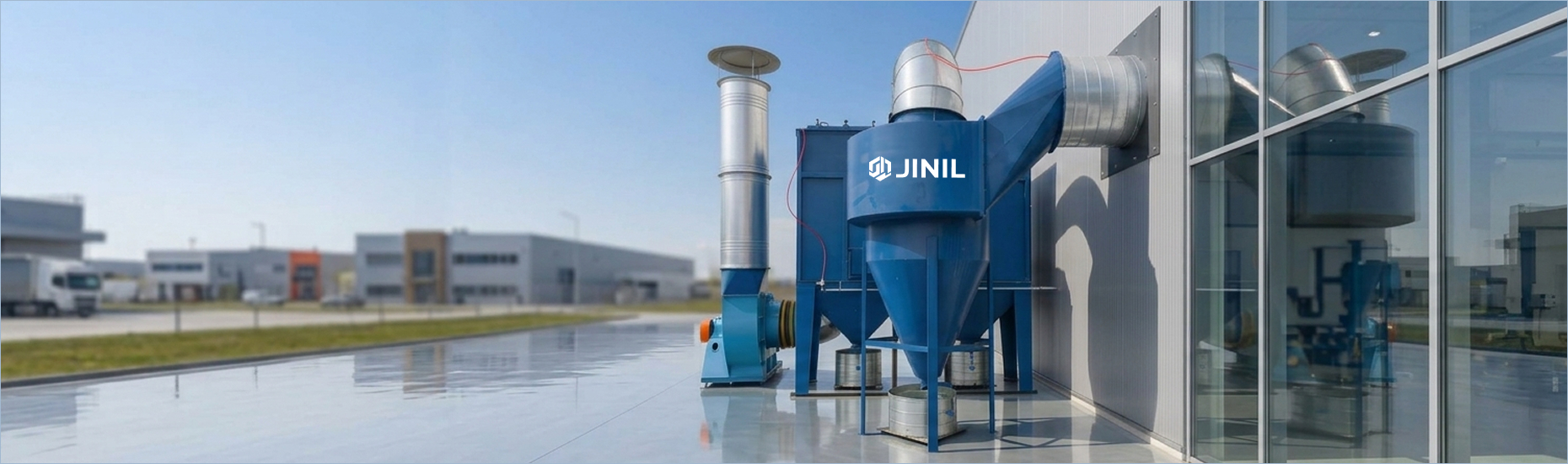
All blast operations produce large quantities of airborne dust, fine abrasive grit, and other contaminated materials. With no dust extraction, air quality will suffer; the health and safety of the operator will become an issue; the cleanliness of the blasted surface will also be impaired. A shot blasting dust collector is not an optional add-on. It is a core component of any well-engineered blasting system.
Whether you are running a tumble blast machine, a hanger type system, an airless shot blasting machine, or a tunnel configuration, the dust collector keeps the internal environment clear, protects your operators, and ensures the abrasive recirculation system works correctly. Getting dust collection right is as important as getting the blast wheel configuration right.
"A clean blast environment is not just about safety. It is what allows the machine to perform consistently, shift after shift."
What Is a Dust Collector for Shot Blasting and How Does It Work?
A dust collector for shot blasting is an industrial air filtration system designed to capture and remove airborne dust, spent abrasive fines, and surface contaminants generated during the blasting process. It maintains clean air inside the blast enclosure and prevents fine particles from recirculating into the abrasive working mix.
The system draws contaminated air from the blast chamber through ducting into the collector unit. Inside, air passes through filter media where fine dust particles are separated and collected. Clean air is discharged back into the facility or exhausted outside while collected dust falls into a hopper for disposal.
Understanding the working principle of an airless shot blasting machine helps clarify why dust collection is critical. As blast wheels accelerate abrasively at high velocity, impact on the workpiece generates considerable airborne dust and fractured abrasive particles. Without effective extraction, this builds up inside the blast chamber, reduces visibility, degrades the abrasive mix, and shortens machine component life.
Role of a Dust Collector in a Shot Blasting Machine
The dust collector does more than clean the air. It plays a direct role in the overall performance and reliability of the shot blasting system. Dust collection capacity and design must be matched to the machine it serves.
An undersized or poorly maintained industrial dust collector allows fine particles to accumulate in the abrasive working mix. When fines build up, blast efficiency drops, surface quality becomes inconsistent, and wear on blast wheels and liners accelerates. The dust collector is directly connected to the surface finish quality the machine produces. It also protects operators from prolonged exposure to respirable dust, including metal oxides and silica. Proper dust extraction is a regulatory requirement in most industrial jurisdictions, not just a best practice.
Types of Dust Collectors Used for Shot Blasting
Several types of dust collection systems are used in shot blasting applications. The right choice depends on machine type, blast intensity, production volume, and the nature of the dust being generated. As a leading industrial shot blasting machine manufacturer, Jinil integrates dust collection systems matched to each machine configuration rather than treating them as a generic add-on.
1. Cartridge Filter Dust Collector
The cartridge filter dust collectors use cylindrical pleated cartridge elements for fine dust collection. They provide large surface filtration with a smaller footprint, thereby ideal for heavy and medium shot blast work when space is critical. An automatic cartridge cleaning system is used, which, using pulses of compressed air, regularly cleans up dust accumulated on the cartridge and ensures the free flow of air.
2. Baghouse Dust Collector
A baghouse dust collector uses fabric filter bags to capture dust from the airstream. These are preferred for high capacity dust collector applications where large volumes of air need filtering continuously. Baghouse systems handle heavier dust loads and are commonly used with large tunnel type or roller conveyor shot blasting machines. They require more space and slightly more maintenance compared to cartridge systems.
3. Cyclone Dust Collector
Centrifugal separation takes place before the air enters the filter media in a cyclone dust collector. Heavier particulates are forced to the outside wall to enter a hopper by the vortex motion generated by tangential flow of air. Finer dust is passed to a secondary filter unit. Cyclone systems are often used as pre-separators upstream of cartridge or baghouse collectors to extend filter life in heavy blasting environments.
4. Wet Dust Collector
This type of dust collector utilizes water as the filter medium. The dirty air is pushed through a water curtain that carries the particles of dust down into a sump to be removed. They are designed for applications where the dust is corrosive, is a potential explosion hazard, or in locations where dry filtration might present a health risk. They are less common in standard shot blasting but are used for specialist applications involving reactive metals.
Main Components of a Shot Blasting Dust Collector
A shot blast dust extractor is made up of several components that work together to deliver consistent dust extraction throughout the blasting cycle.
Filter Media
The filter media is the heart of the dust collector. In cartridge systems, it is a pleated filter element made from cellulose, polyester, or membrane-coated media. In baghouse systems, it is a woven or felted fabric bag. Filter media determines filtration efficiency, pressure drop, and cleaning frequency.
Fan and Motor Assembly
The fan draws contaminated air through the ducting and filter media. Fan capacity must be matched to the blast machine size and total duct resistance. An undersized fan results in poor extraction, while an oversized fan wastes energy and causes turbulence inside the blast chamber.
Pulse Jet Cleaning System
In cartridge and baghouse collectors, a pulse jet system fires short bursts of compressed air through filter elements to dislodge accumulated dust automatically. This keeps filters clean during operation without interrupting production.
Dust Hopper and Discharge System
The collected dust settles into a dust hopper at the bottom of the collector, then is transported into a Rotary Valve / Screw conveyor for removal from the site. Periodic clearance is a requirement to avoid congestion & ineffective extraction
Benefits of Using Dust Collectors in Shot Blasting
"Dust collection is where safety and performance meet. You cannot have one without the other in a serious blasting operation."
An effective industrial dust extraction system delivers benefits well beyond regulatory compliance. It helps maintain cleaner working conditions while supporting consistent visibility and blasting performance. When combined with the benefits of airless shot blasting machines, effective dust collection can contribute to a more controlled and efficient surface preparation process.
1. Improved Operator Health and Safety
Airborne dust is generated; it consists of metallic fines & surface dirt from the workpiece being treated. A correctly sized, heavy-duty dust collector will keep dust concentrations below exposure limits & operator safety sustained throughout the work shift.
2. Consistent Abrasive Mix and Surface Quality
When fines are efficiently removed from the abrasive working mix, the mix composition stays within the optimal range. This ensures consistent abrasive velocity, surface impact and finish quality across every workpiece processed.
3. Extended Machine Component Life
The unremoved abrasive fines & dust settle onto conveyor parts, blast wheel assemblies & bearings, increasing the wear and premature failures of all components. Correct dust extraction effectively keeps the internal machine environment clean and will prolong component service life dramatically.
4. Regulatory Compliance
Facilities operating shot blasting equipment are subject to air quality and occupational health regulations. A properly specified industrial dust collector for shot blasting ensures the facility operates within these limits and avoids legal and operational consequences of non-compliance.
Industrial Applications of Shot Blasting Dust Collectors
Dust collectors for shot blasting are used across industries wherever abrasive blasting is part of the production process.
- In automotive manufacturing, dust collectors serve tumble blast and hanger-type machines, cleaning castings and fabricated assemblies before painting.
- In structural steel fabrication, large tunnel lines require high capacity systems for continuous operation.
- In foundries, dust collectors manage heavy silica and metal oxide dust from sand castings.
- In aerospace and defence, precise dust collection maintains clean blasting environments for sensitive components where contamination control is critical.
How to Choose the Right Dust Collector for a Shot Blasting Machine
Choosing the right dust collector requires evaluating several factors together. Airflow capacity must be matched to blast chamber size, number of blast wheels, and duct resistance. Filtration efficiency should meet occupational health standards for the dust types generated. Dust load and type affect filter selection and cleaning frequency. The collector must also be properly integrated with the airless shot blasting machine it serves in terms of ducting layout, extraction points, and control system. A collector that is not correctly integrated will not deliver consistent extraction regardless of its rated capacity.
Cartridge vs Baghouse Dust Collector for Shot Blasting
| Parameter | Cartridge Collector | Baghouse Collector |
|---|---|---|
| Filtration Area | High in compact footprint | Very high, larger footprint |
| Dust Load Handling | Medium to heavy | Heavy to very heavy |
| Cleaning Method | Pulse jet, automatic | Pulse jet or shaker, automatic |
| Maintenance | Filter replacement, periodic | Bag inspection and replacement |
| Space Requirement | Compact | Larger installation area |
| Best For | Medium production machines | High volume continuous lines |
Dust Collector Maintenance Requirements
A dust collector that is not maintained properly loses extraction efficiency until it stops performing. Regular maintenance keeps a shot blasting dust collector reliable.
- Filter Inspection and Replacement: Filter elements should be inspected at regular intervals for damage and increased pressure drop. A significant rise in pressure drop indicates cleaning is no longer restoring efficiency and replacement is needed. Delaying replacement reduces airflow and deteriorates air quality inside the blast machine.
- Hopper Emptying and Discharge System Check: The dust hopper must be emptied regularly to prevent blockages. The rotary valve or discharge mechanism should be checked for wear and proper sealing to prevent dust from re-entering the facility air.
- Fan and Motor Inspection: The fan impeller should be inspected periodically for abrasive wear. Bearing condition, belt tension, and motor current draw should be checked at regular service intervals to prevent unexpected failures during production.
Why Choose Jinil for Shot Blasting Dust Collection Solutions?
"The dust collector is not a separate system. It is part of the machine, and it needs to be designed that way from the start."
Jinil, a shot blasting machine manufacturer designs and supplies dust collection systems as an integrated part of every shot blasting machine. Every collector is specified based on the actual blast machine configuration, production volume, and dust load. The airless shot blasting machines from Jinil are engineered with dust collection as a core design element. Duct sizing, extraction point placement, and fan selection are calculated for each machine to deliver consistent extraction from day one. Jinil also provides installation, commissioning, and after-sales support, including replacement filters, wear parts, and technical assistance throughout the machine's working life.

Conclusion
A shot blasting dust collector has a critical impact on both the overall operation and lifespan, and the safety of shot blasting equipment. For optimal performance, the dust collection should be matched to the requirements of the application in terms of airflow capacity, filter efficiency, and dust load management. The principle remains consistent from a small cartridge dust collector on a medium-run machine to a large, bag-type bag house system on a continuous tunnel production line.
Specify correctly, integrate properly, and maintain consistently. Jinil builds dust collection into every machine it manufactures because performance and safety are not separate considerations in a serious industrial operation.