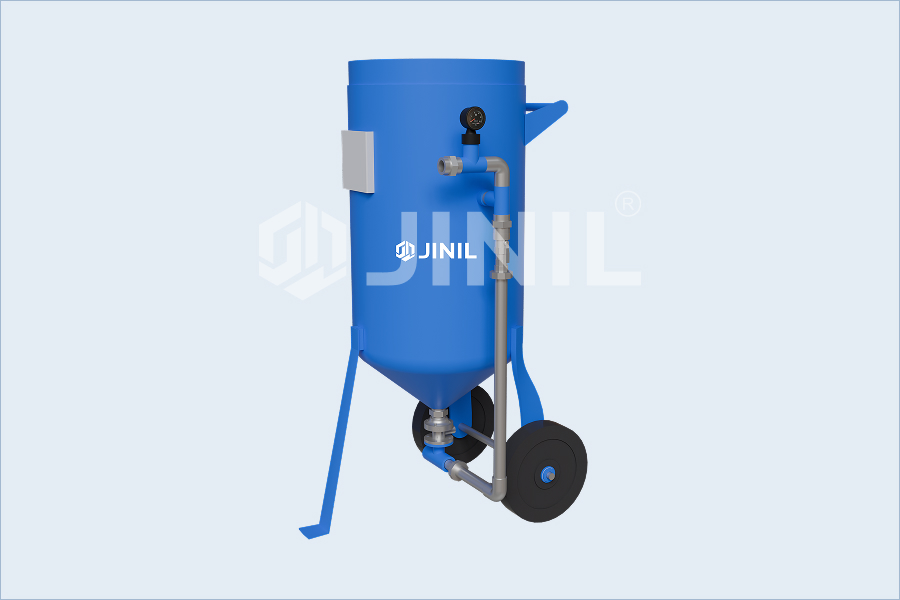
Mobile Blasting Power Anywhere

Mobile Blasting Power Anywhere

The air-operated portable blaster is a mobile blasting unit made for cleaning and preparing metal surfaces directly at the work site. It removes scale, paint, and rust, creating the proper texture for the coating to adhere to. This portable blasting machine was designed for easy transport and is ideal for maintenance and fabrication applications where structures are difficult to transport to the workshop.

It works based on a basic, standard design. When pressurized air forces abrasive down into a blast pot, this abrasive fills with air and is pushed through a tube down a hose and out of the blast nozzle at your job surface. Because it is an air-operated sand blasting machine, it handles on-site work like shipyard hulls, pipelines, storage tanks, and structural steel, giving steady cleaning output wherever it is set up.

Built With Precision Components

Main Components

1

Pressure Blast Vessel

Heavy-duty fabricated pressure vessel designed according to industrial safety standards.

2

Abrasive Metering Valve

A precision control valve is used to regulate abrasive flow into the air stream.

3

Blast Hose

Heavy-duty anti-static rubber hose designed for abrasive transfer and long service life.

4

Blasting Nozzle

High wear-resistant tungsten carbide or boron carbide nozzle for efficient blasting performance.

5

Remote Control System

Deadman control system for safe start and stop operation.

6

Moisture Separator

Removes water and oil from compressed air to ensure smooth abrasive flow.

Engineered Output Parameters

Standard Technical Specifications

Pot Capacity (L) 100 L 200 L 300 L
Abrasive Capacity (Sand / Grit kg) 120 – 150 kg 240 – 300 kg 360 – 420 kg
Recommended Nozzle 6 – 8 mm 6 – 10 mm 8 – 12 mm
Required Air (CFM @ 7 bar) 90 – 170 CFM 100 – 250 CFM 150 – 450 CFM
Production Capacity 4 – 10 m²/hr 6 – 18 m²/hr 10 – 30 m²/hr
Air Hose Size 1 1
Blast Hose Size
Machine Size (L×W×H mm) 700 × 700 × 1250 850 × 850 × 1400 950 × 950 × 1600
Approx Weight 140 kg 180 kg 230 kg

Related Industries You May Like

Portability is the advantage of an air-operated portable blaster, especially for handling large, fixed, or hard-to-move structures. That applies in industries working on pipelines, heavy structures, or steel fabrications - all of which tend to have their surfaces moved to the blaster rather than the other way round.

Complete Support Portfolio

Applications

The portable blasting machine is suitable for a wide range of industrial cleaning and maintenance applications.

1

Structural steel preparation before painting or coating

2

Pipeline surface cleaning

3

Tank maintenance and coating removal

4

Shipyard hull cleaning and corrosion removal

5

Bridge and infrastructure maintenance

6

Rust removal from industrial steel surfaces

7

Surface roughening before protective coatings

Operational Performance Benefits

Advantages

The Air-Operated Portable Blaster offers multiple benefits for industrial users requiring mobile blasting solutions.

  • Portable and easy to move between job sites
  • Strong blasting performance for heavy-duty cleaning
  • Suitable for outdoor and field operations
  • Effective rust, scale, and paint removal
  • Reliable pressure blasting system
  • Fast surface preparation results
  • Compatible with multiple abrasive media

Optional Accessories

Each portable blaster can be fitted with optional add-ons based on the job and site needs. These range from operator safety gear to abrasive recovery systems.

Blast Helmet with Air Supply

Protective blasting helmet with a clean air supply for operator safety, comfort, and dust-free breathing.


Abrasive Recycler

Collects, cleans, and reuses abrasive media to reduce waste and improve blasting efficiency.


Air Dryer System

Keeps the compressed air supply dry, which stops moisture from clogging the media and holds blasting output steady.


Nozzle Holder and Extension Pipe

Provides better nozzle support and extended reach for safer blasting of difficult areas.


Blast Room Abrasive Recovery System

Recovers spent abrasive media from blasting rooms for cleaning, reuse, and cost-effective operations.


Frequently Asked Questions

Clear answers to common questions about Jinil's shot blasting machines, surface preparation solutions, and engineering support, helping you make informed decisions with confidence.
1. What is an Air-Operated Portable Blaster? +

The machine is based on a blast pot. The pot is pressurised using compressed air, and the abrasive media is metered into the air stream, which is then blasted via a hose and a nozzle at the surface. Because it sits on a compact, movable frame, the machine can be taken straight to large or fixed structures on-site.

2. What is a portable sand blasting machine used for? +

This machine is utilized for the cleansing of steel surfaces, removing corrosion and paint, and preparing the metal surface prior to painting.

3. Can this machine be used for outdoor applications? +

It is perfectly suited for external on-site uses, including bridge maintenance, pipeline service and repair, structural steel and tank repair.

4. What size air compressor does a portable blaster need? +

It depends on the nozzle. As a guide, a small nozzle may need around 90 CFM while a larger one may need 400 CFM or more at 7 bar.

5. How much abrasive does a portable blaster consume? +

Consumption depends on nozzle size, pressure, and the media used. Larger nozzles and higher pressure clean faster but use more abrasive per hour.

6. Why is dry compressed air important for this machine? +

Moisture makes the abrasive damp, which clogs the metering valve and the nozzle and interrupts blasting. A moisture separator and an air dryer keep the media flowing freely and the finish consistent.

7. What abrasives can be used in this machine? +

Heavier media, such as aluminium oxide or steel grit, are suitable for the fast and aggressive cleaning of scale and heavy rust, whilst finer media such as glass beads or garnet produce a smoother surface.

8. How does the dust collector help? +

During blasting, the dust collector draws off the fine dust. That keeps the operator's view of the work clear, holds down airborne dust around the site, and supports safer, cleaner working conditions.