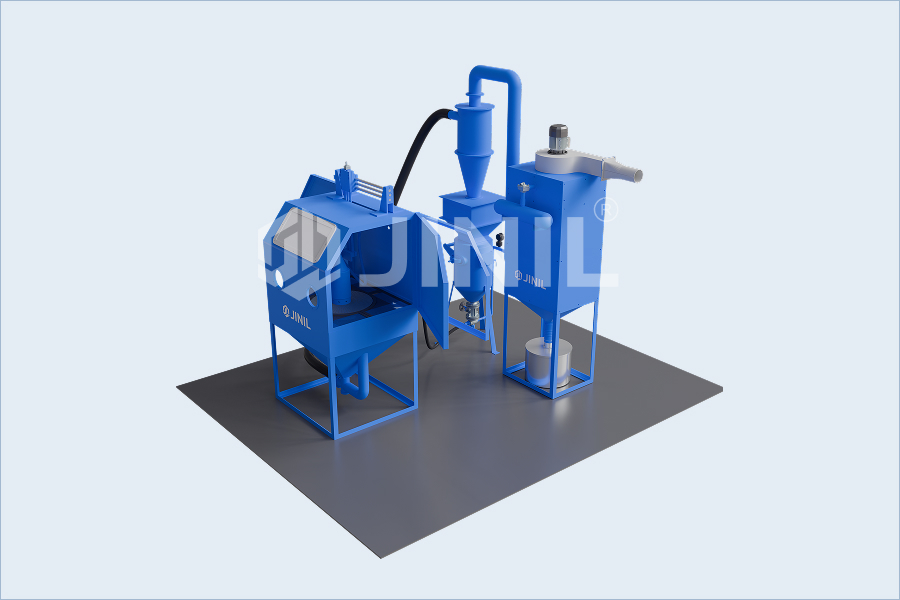
This is a tough machine designed for rapid and vigorous cleaning. Instead of suction through the blast cabinet, the media is carried in a pressure tank and blasted using compressed air. The media is expelled at much greater velocity, and the machine strips rust, scale, and coatings incredibly faster than its suction counterpart.
As it’s a “pressure” type shot blasting machine, it is more capable than a suction-powered system at handling big parts and dense, heavy media. Also, due to its effectiveness with steel shot and steel grit, the pressure model is effective at getting parts really clean and at proper surface profiling before coating. For shops that need real cleaning power in a sealed, dust-controlled abrasive blasting cabinet, the pressure type delivers it.
Smart Process Overview
Abrasive media is charged into the heavy-duty pressure blast cabinet. After pressurizing the vessel with compressed air, the media enters the stream and travels through the blast hose to the blasting nozzle. Here, it hits the substrate to efficiently remove existing scale, rust, and old coatings, as well as any other contaminants.
Any abrasive or dirt is drawn to the recovery system and/or the floor upon impact. The dust collection system pulls the dust from the area, and the blast media can be recycled for reuse in the blast gun. The cycle leads to higher blasting pressure and much quicker cleaning for the highest level of surface preparation.
Built With Precision Components
Pressure Vessel (Blast Pot)
Heavy-duty pressure-rated vessel designed to store and pressurize abrasive media for high-speed blasting.
Abrasive Metering Valve
Sets how much abrasive enters the air stream, so the air-to-media mix stays steady and blasting power holds.
Blast Hose
Tough anti-static rubber hose made to carry abrasives under high pressure without wearing through quickly.
Blasting Nozzle
Tungsten carbide or boron carbide nozzle for long service life and efficient abrasive acceleration.
Remote Control System
Deadman handle remote control system for safe operation and immediate blasting shutdown.
Air Filter and Moisture Separator
Takes water and contaminants out of the compressed air so the abrasive flows smoothly and does not clog.
Dust Collection System
A cyclone separator or bag filter dust collector to maintain cleaner working conditions.
Engineered Output Parameters
| Machine Type | Pressure Type Abrasive Blasting Machine |
|---|---|
| Vessel Capacity | 100 – 300 Liters (customizable) |
| Working Pressure | 5 – 8 bar |
| Air Consumption | 150 – 600 CFM (depending on nozzle size) |
| Nozzle Size | 6 – 12 mm |
| Abrasive Type | Garnet, Aluminium Oxide, Steel Grit, Steel Shot |
| Hose Length | 10 – 20 meters |
| Control System | Remote Deadman Control |
| Electrical Requirement | Optional (for dust collector / recovery system) |
Complete Support Portfolio
The Air-Operated Shot Blasting Cabinet – Pressure Type is suitable for heavy-duty cleaning and blasting applications
Heavy rust removal
Surface preparation before painting or coating
Structural steel cleaning
Ship hull maintenance
Pressure vessel surface preparation
Pipe external blasting
Foundry casting cleaning
Bridge and tank maintenance
Operational Performance Benefits
The pressure-type shot blasting machine offers several benefits for industrial users requiring stronger blasting performance.
Enclosed blasting room with a recovery system that collects, cleans, and reuses abrasive media for efficient operations.
Splits good abrasive from dust and broken grit, so only clean media go back to the gun and output stays steady.
Supports and positions the blasting nozzle for controlled movement, reducing operator fatigue during long operations.
Strips moisture from the air supply so the media stays dry, which keeps the flow steady and the finish even.
Pulls dust and fine particles out during blasting to keep the air clear and the view clean.
Protective operator suit with fresh air supply for safer and more comfortable blasting operations.
Mobile recovery unit that collects and reuses spent abrasive media for cost-effective field blasting work.
It is a sealed cabinet that stores abrasive material in a pressure vessel and drives it out under compressed air at high speed. This gives strong, fast cleaning for heavy rust, scale, and coatings.
Pressure blasting offers higher blasting force, faster cleaning speed, and deeper cleaning capability, while suction blasting is generally used for lighter-duty applications.
It is used for heavy rust removal, coating removal, structural steel cleaning, pipe blasting, ship maintenance, and industrial surface preparation before painting.
A pressure cabinet drives media far harder, so it commonly cleans around 3 to 4 times faster than a suction unit. That makes it the better fit for high-volume and heavy-duty work.
Yes. The pressure vessel forces media out under air, so it handles dense abrasives like steel shot and grit with ease, which suits deep cleaning and surface profiling.
Yes. Pressure blasting uses more compressed air to drive the media, so it needs a larger compressor sized to the nozzle for steady output.
Yes, the machine is designed for aggressive blasting and performs effectively on heavily corroded, scaled, or coated surfaces.
It runs heavier media well, including steel grit, steel shot, aluminium oxide, and garnet. The abrasive is chosen to match the cleaning depth and finish the job needs.