Custom Blast Rooms for Industrial Surface Treatment

Custom Blast Rooms for Industrial Surface Treatment

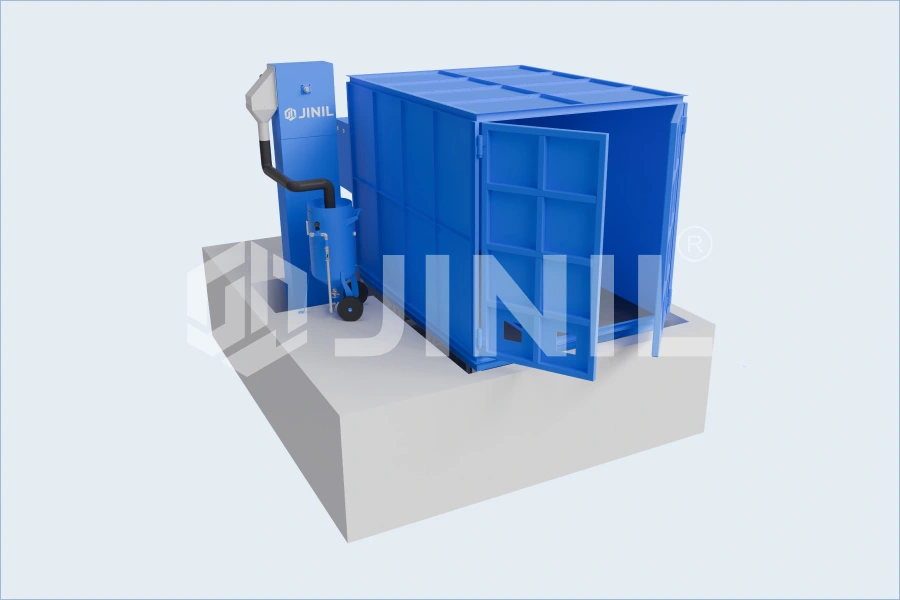
Jinil builds custom turnkey blast rooms for large equipment, aerospace structures, and structural steel. Turnkey simply means we handle the full job, from design to a room that’s ready to use. Inside, the operator holds a nozzle and uses compressed air and abrasives to clean the metal. This takes off rust, mill scale, old paint, and weld spatter, and leaves a rough, clean surface that paint can hold on to. Every room comes with complete media recovery, ventilation, and dust capture, so the abrasive gets reused and the dust stays out of your shop.

Plants rarely need the same thing. A compact shot blast booth may be enough for medium parts, while long steel structures or large aerospace parts call for a full sand blasting room. We look first at your largest component and how many parts go through each shift. The room size, media recovery, airflow, and dust collection are then planned to match. Once it’s installed, our service team takes care of commissioning, spare parts, AMCs, and 24/7 support, so your blast room equipment stays in working order.

Smart Process Overview

Working Principle

In a Jinil blast room system, loading comes first. The part is brought in on a trolley or rail cart, or lifted in with a crane. During blasting, the operator points the nozzle at the part, and the abrasive comes from the blast pot.

For abrasive recovery, the used abrasive falls to the floor and gets carried back. In abrasive cleaning, dust and waste are sorted out in the separator, and the good abrasive goes back into the blast pot.

The dust collector keeps pulling dust out while the operator blasts. Once the part is clean, unloading follows, and the part goes out for painting or coating.

Built With Precision Components

Main Components

1

Blast Room Enclosure

A strong steel room, big enough to walk around your largest part.

2

Rubber Lining

Abrasive hits the walls hard all day. Thick rubber sheets soak up that wear, so the steel behind them lasts.

3

Blast Pot

Think of it as the room’s abrasive tank. Compressed air pushes the abrasive from here to the nozzle.

4

Blast Hose and Nozzle

Abrasive travels down the hose and shoots out of the nozzle onto the part. Blasting stops the moment the operator lets go of the deadman handle.

5

Abrasive Recovery System

Used abrasive doesn’t go to waste. This system collects it so it can be used again.

6

Bucket Elevator and Separator

First, the elevator lifts the abrasive up. Then the separator takes out the dust, fines, and waste.

7

Dust Collector

It has cartridge or bag filters that suck the dust out of the room.

8

Lighting

The lights are covered for protection and help the operator see the surface clearly.

9

Operator Safety Gear

A blast suit and blast helmet, with a breathing air supply as per the system supplied.

10

Control Panel

One panel runs the recovery system, dust collector, and lights.

Engineered Output Parameters

Standard Technical Specifications

Blasting method Air-operated (compressed air and nozzle)
Room size Built to fit your largest component
Abrasive recoveryq Floor recovery system, selected to suit room size and output
Abrasive Steel shot, steel grit and other suitable abrasives
Blast pot Sized to your production needs
Dust collection Cartridge or bag filter
Wall lining Rubber lining
Lighting Protected industrial lights
Part movement Trolley, rail cart or overhead crane

Why Choose Jinil Shot Blast as a Blast Room Manufacturer?

Jinil is a leading blast room manufacturer and paint booth manufacturer in India. We design and build blast rooms, paint booths, abrasive recovery, and dust collection systems, and we focus on performance, reliability, and operator safety. Your plant gets higher output and easier upkeep, with one team from layout to after-sales support.

Every room is designed and built in our own facility, which is what in-house manufacturing means for you. The right room size comes from your components and your floor space. Because the room, recovery, dust collection, and lighting all come from us, you get a complete system from one supplier. We sit down with your team to sort out the layout and civil work, so easy installation is part of the plan. Once the room is running, our after-sales care covers spare parts, upgrades, and AMCs.

From Enquiry to Installation

It begins with Requirement Analysis, where your components, output, and available space are studied. From there, Room Design covers the room size, recovery system, and dust collection. The last stage is Installation and Commissioning. Our team installs the room, sets it up, and tests it.

Searching for a sandblasting room for sale? There is no fixed price. The cost depends on room size, the recovery system, the dust collector, and any accessories, so we quote based on your actual components and plant layout.

Related Industries You May Like

Industrial blast rooms come in a variety of shapes and sizes to accommodate the diverse requirements of various industries. As the top blast room manufacturer and supplier in India, Jinil offers customized blast rooms that are flexible in terms of size and functionality, according to our clients' unique requirements. Additionally, we provide pre-engineered blast rooms that are simple to build and utilize in any type of environment. A portable blast room's portability can be advantageous for on-site projects. Depending on the particular needs of the operation, each form of blast room has advantages.

Industrial Solutions

Applications

Plants use our industrial blast rooms and shot blasting rooms to clean and prep big, heavy parts such as:

1

Steel structures and beams: Mill scale and rust come off, so the paint grips better and stays on for years.

2

Pre-engineered building (PEB) parts: Long frames and rafters get the same even finish from one end to the other.

3

Pressure vessels, tanks and pipes: Scale and weld marks are cleaned off before the paint or lining goes on.

4

Heavy machinery frames and parts: These are too big for a cabinet, but in a room the operator can walk around and reach every corner.

5

Railway wagons and bogie parts: Old paint and rust are stripped off, whether it’s a new build or an overhaul.

6

Fabricated and welded assemblies: Spatter and slag from welding are cleared away, so the coating goes on evenly.

7

Repair and maintenance work: Peeling paint is taken right down to bare metal before the part is recoated.

Industrial Solutions

Advantages

A Jinil blast room or Sand Blasting Booth gives your team a safer place to work and a better-prepared surface:

  • Big parts handled: Some parts are simply too big for a cabinet machine. In a room, your operator can walk all the way round and clean each side.
  • Better coating life: A clean, rough surface holds paint far better. You’ll spend less time on touch-ups later.
  • Cleaner workplace: The room stays closed and the dust collector runs the whole time. So most of the dust never reaches your shop.
  • Lower running costs: Used abrasive is picked up, cleaned, and fed back to the pot. You end up buying a lot less.
  • Safer working: Your team blasts inside a closed room, with bright lights, proper gear, and dust pulled out all the time.

Optional Accessories

Based on the application, we can add:

Rail track and trolley

Heavy parts move in and out with less effort.


Operator platform or lift

Safe reach to tall parts.


Breathing air filter and cooler

Cleaner, cooler air for the operator.


Abrasive level sensor

Lets you know when the blast pot needs topping up.


Soundproof panels

Bring down noise around the room.


Paint booth integration

Parts go from blasting to painting.


Frequently Asked Questions

Clear answers to common questions about Jinil's shot blasting machines, surface preparation solutions, and engineering support—helping you make informed decisions with confidence.
1. What Is a Blast Room? +

A blast room is a closed room where an operator cleans metal parts using compressed air and abrasive. It takes off rust, scale, and old paint. The closed walls and dust collector help keep the dust and abrasive in one place.

2. How Does a Blast Room System Work? +

The part is blasted using a nozzle that is fed by the blast pot. Used abrasive is collected from the floor, cleaned in the separator, and then put to new use. While the operator blasts, the dust collector pulls the dust out.

3. What Is the Difference Between a Blast Room and a Blast Booth? +

A blast room is fully enclosed and usually comes with abrasive recovery and dust collection. It’s built for big parts and daily production. A blast booth is a simpler setup, good for smaller jobs or when you don’t blast very often, and its recovery system may be basic. To pick the right one, think about your part size, how much you produce, and how abrasive you want to recover.

4. What Is a Shot Blast Booth? +

A shot blast booth is an enclosed space where parts are cleaned with steel shot or grit through a blast nozzle. It’s suited to medium-sized parts and lower production volumes.

5. What Are the Applications of Industrial Blast Rooms? +

Before painting, industrial blast rooms are used to clean steel structures, PEB parts, tanks, pipes, railway parts, and heavy machinery. They’re useful in repair work too. When a part comes in rusty or with old paint, it gets blasted clean before it goes back into use.

6. How Do I Choose the Right Blast Room for My Application? +

Start with three things: your biggest part, how many parts you run, and the abrasive you plan to use. Between them, they decide the room size, the kind of recovery system, and how large the dust collector should be. Share these details with Jinil, and we’ll suggest a setup that fits.

7. What Factors Should I Consider When Selecting a Blast Room Manufacturer? +

Ask the manufacturer how many years they’ve been building blast rooms and if the equipment is made in their own factory. You should also know who will help you after the room is installed. Buying the room, recovery system, and dust collector from one company makes things simpler. Jinil designs, builds, and services the whole blast room, so you only deal with us.

8. Can Blast Rooms Be Customised According to Component Size? +

Yes. Every Jinil blast room is built to take your largest component, with space left for the operator to work around it. The doors, recovery system, and part handling are planned around your components as well.

Get a Quote from a Trusted Shot Blasting Machine Manufacturer

Talk to our engineers about the right airless shot blasting machine, blast room, or dust collector for your production line.